
Net CO₂-negative insulation, proven with a baseline measurement
For Wesselink Isolatie, New Economy carried out a baseline measurement of the company’s CO₂ impact. The most striking finding: the savings from using the insulation are almost twice as large as the impact of production and installation — net CO₂-negative. With 100% biobased materials, every kilo of insulation stores 1.3 kg of CO₂, against 0.09 kg of emissions.
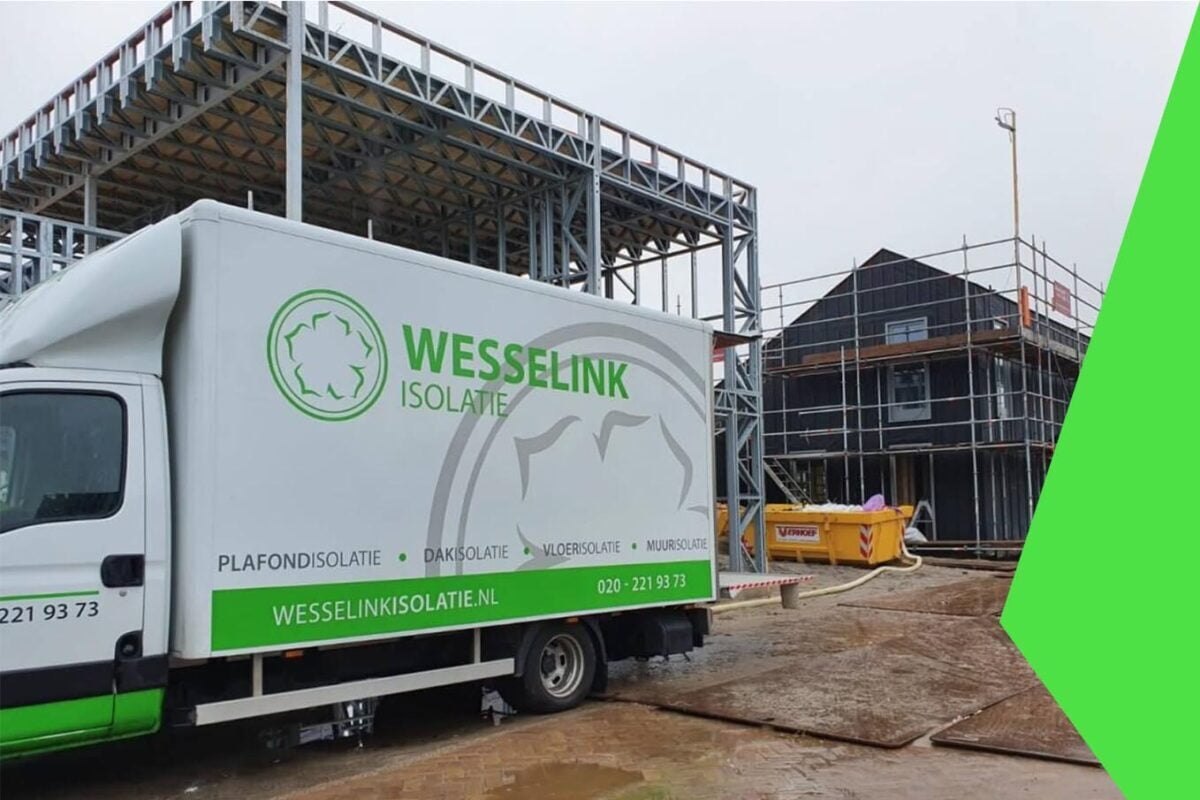
Wesselink Isolatie baseline measurement
The full baseline measurement of the CO₂ impact as a PDF, with the reasoning behind the figures.
Download the baseline measurement (PDF)About this project
- Prepared by
- New Economy.
- Client and sector
- Wesselink Isolatie — construction and insulation.
- The question
- Where does the company currently stand on climate impact, and what does climate-neutral business mean for day-to-day operations?
- The result
- Net CO₂-negative insulation, with hotspots and opportunities towards climate-neutral and regenerative business.
In short
For Wesselink Isolatie, New Economy mapped the CO₂ impact of the company’s activities through a baseline measurement. The core finding: biobased insulation stores more CO₂ over its lifetime than its production and installation emit.
The savings outweigh production. The CO₂ savings from the insulation are almost twice as large as the impact of production and installation — net CO₂-negative.
The question
The insulation task in the Netherlands is enormous: nearly 8 million homes with energy label C or lower still need to be insulated, plus a growing number of new-build projects. Insulation is often framed purely as CO₂ reduction through lower heat demand, but the environmental impact of producing the materials themselves stays out of view. Wesselink Isolatie, with the ambition to become climate-neutral and even regenerative, asked New Economy to make clear where the company currently stands.
The approach
Through a baseline measurement, New Economy mapped the current climate impact of operations — from purchased materials to the staff lunch — and identified where Wesselink can realise the greatest positive impact.
The result
The key findings are shown as figures above: net CO₂-negative insulation, with savings almost twice as large as the impact of production and installation, and biobased material that stores 1.3 kg of CO₂ per kilo against 0.09 kg of emissions. The baseline measurement also identified hotspots and opportunities, including biobased materials and renewable energy for blowing-in installation.
Towards climate-neutral, biobased insulation
With 10 years of experience, Wesselink is now moving towards 100% biobased and CO₂-negative insulation. Biobased materials store, for the long term, the CO₂ that plants absorbed while growing. The materials also improve the living environment, reduce noise nuisance and cut energy use — a double benefit.
Every euro spent on cellulose insulation stores CO₂ in your home!
Wesselink IsolatieWhat this delivers
Net CO₂-negative insulation shows how construction can shift from burden to repair — towards regenerative practice. It usually starts with a baseline measurement.
Insights from this project
Frequently asked questions
A baseline measurement of the CO₂ impact of the company’s operations, with insight into hotspots and opportunities towards climate-neutral and regenerative business.
Yes: the CO₂ savings from using the insulation are almost twice as large as the impact of production and installation.
Every kilo of biobased insulation material stores 1.3 kg of CO₂ over its lifetime, against only 0.09 kg of emissions.
A fast way to gain insight into a company’s impact on climate (CO₂-eq), circularity and biodiversity, as a basis for targeted improvements.
Construction, specifically the insulation industry.
Frequently asked questions about CO₂-negative insulation
It means the insulation stores more CO₂ over its lifetime than its production and installation emit. According to the baseline measurement, the savings are almost twice as large as that impact.
Biobased materials store, for the long term, the CO₂ that plants absorbed while growing. That carbon stays locked in the insulation material in the home.
According to this project, nearly 8 million homes with energy label C or lower still need to be insulated, plus a growing number of new-build projects.
The current climate impact of all company activities, from purchased materials to the staff lunch, and where the greatest positive impact can be realised.
It pointed to opportunities with biobased materials and renewable energy for the blowing-in installation.
The materials improve the living environment, reduce noise nuisance and cut energy use, giving a double benefit.
Insulation is usually framed as CO₂ reduction through lower heat demand, while the environmental impact of producing the materials themselves stays out of view. The baseline measurement makes exactly that impact visible.
With 10 years of experience, Wesselink is moving towards 100% biobased and CO₂-negative insulation, as a step towards climate-neutral and regenerative business.
Related reading
Net CO₂-negative construction
From baseline measurement to insight into hotspots and opportunities towards climate-neutral and regenerative business. See also Baseline measurement / footprint.
Plan a conversation