
Agriculture and land use in Gelderland 2025
Agriculture and land use are one of the most critical domains in Gelderland’s 2025 climate snapshot. Emissions increased from 3,419 to 3,598 kilotonnes of CO2-equivalent, while the calculated 2030 reduction potential remains fully open. The analysis identifies where acceleration is possible: manure, diet, feed, soil, forest, landscape elements and regenerative agriculture.
Published March 2025 · data through 2022 and 2023 · part of the Gelderland Climate Opportunities Map
Download the sector analysis Back to the Dutch 2025 snapshot
A progress layer, not a replacement for previous analyses
- Main page
- Gelderland Climate Opportunities: 2025 Snapshot and Reflection
- Method
- TTW emissions accounting and WTW solutions analysis
- Previous layer
- Gelderland Climate Opportunities: agriculture and land use and PCSA Gelderland agriculture and land use
- Carbon
- Carbon sequestration: Gelderland and Carbon opportunities for Gelderland
Sector profile and trend
Agriculture and land use form a large and hard-to-abate emissions domain in Gelderland. The 2025 snapshot shows an increase from 3,419 to 3,598 kilotonnes of CO2-equivalent. This is a rise of just over 5%, rather than a decline. The sector is therefore not yet on track for the reduction needed towards 2030.
The task is broader than emissions reduction alone. Agricultural land, soil, forest and landscape elements also determine how much carbon can be stored in the landscape. This gives the sector both a reduction challenge and a natural sequestration opportunity.
Core signal. The 2030 reduction potential is estimated at 305 to 1,025 kilotonnes of CO2-equivalent. In the progress measurement, 0% is marked as realised. Acceleration requires policy, finance, area-based implementation and stronger monitoring.
The solutions
The largest leverage does not sit in a single measure. It lies in a package of manure digestion, methane reduction, feed transition, protein transition, afforestation, soil carbon and regenerative agriculture.
Manure digestion and green gas
Manure digestion and green gas form the largest quantified reduction lever in the ambitious scenario. The measure links agricultural emissions, renewable gas production and methane reduction, but it also depends on permitting, grid connection, finance and regional organisation.
Plant-rich diet
A shift towards a more plant-rich diet has a large calculated impact because food consumption influences land use, livestock pressure and upstream emissions. In the analysis, this measure is one of the three largest agriculture-related levers.
Feed transition
Feed transition targets emissions linked to livestock production, especially methane and upstream feed-chain effects. Together with dietary change, it defines a major part of the remaining reduction opportunity in the sector.
Afforestation, soil and regenerative agriculture
Natural carbon sequestration is a separate but closely related part of the land-use task. Afforestation, soil carbon, agroforestry and regenerative agriculture can add storage capacity, while also supporting biodiversity, soil quality and landscape resilience.
At a glance
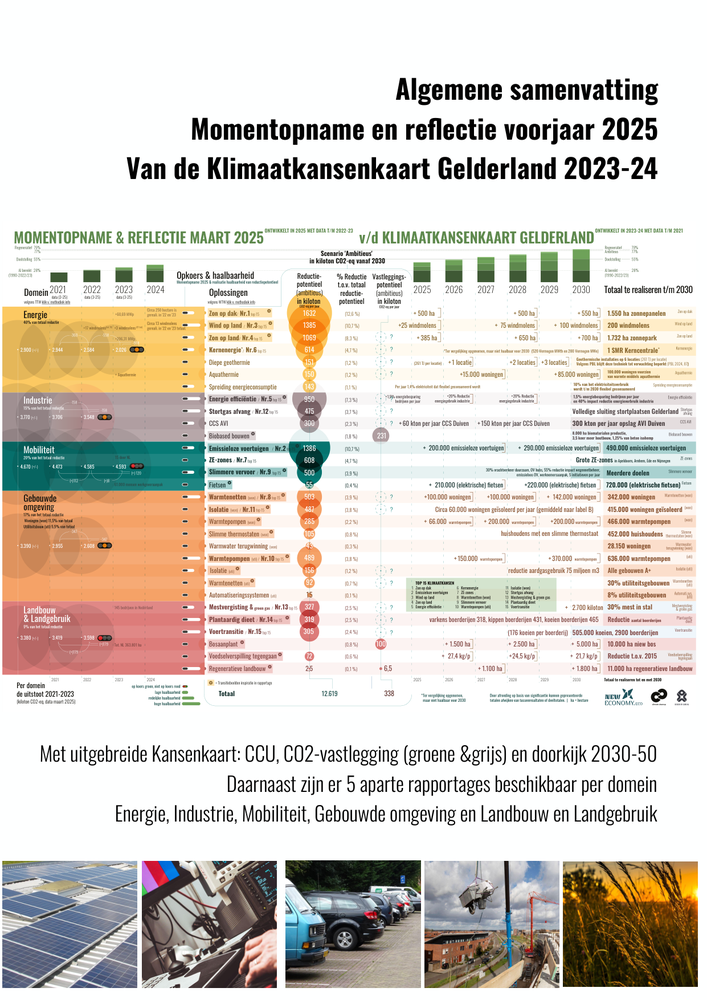
The 2025 snapshot ranks the main opportunities by their 2030 contribution and distinguishes between reduction and sequestration.
| Measure | 2030 potential | Type | Implementation focus |
|---|---|---|---|
| Manure digestion and green gas | 327 kt CO2-equivalent | Reduction | Manure flows, green gas, methane reduction, regional organisation |
| Plant-rich diet | 319 kt CO2-equivalent | Reduction | Food consumption, protein transition, land-use pressure |
| Feed transition | 305 kt CO2-equivalent | Reduction | Livestock feed, methane, upstream feed-chain effects |
| Afforestation, soil carbon and regenerative agriculture | 19 to 107 kt CO2-equivalent | Sequestration | Forest, soil, agroforestry, landscape elements |
Carbon sequestration
For agriculture and land use, carbon sequestration is not an add-on. It is part of the core transition logic. Forests, soils and landscape structures can store carbon while also improving ecological resilience. The 2025 snapshot therefore reports sequestration separately from emissions reduction.
This separation matters. Avoided emissions and stored carbon should not be merged as if they are the same effect. Reduction lowers the flow of greenhouse gases into the atmosphere. Sequestration increases the amount of carbon stored in biomass or soil. Both are relevant, but they require different accounting, governance and risk management.
Important distinction. The sector combines a direct emissions challenge with a natural carbon opportunity. The analysis keeps these two layers separate to avoid double counting and to make the implementation task clearer.
Method and sources
The 2025 publication is a snapshot and reflection layer. It does not replace the earlier Gelderland Climate Opportunities Map. The earlier map remains the planning and potential layer. The 2025 page adds progress, traction, the remaining gap and key attention points towards 2030.
Emissions development is treated as an accounting layer. Solution potential is treated as a solutions layer. The method page explains the distinction between Tank-to-Wheel emissions accounting and Well-to-Wheel solutions analysis.
Frequently asked questions
What does the 2025 snapshot show for agriculture and land use in Gelderland?
It shows that emissions increased from 3,419 to 3,598 kilotonnes of CO2-equivalent. The sector is therefore not yet on track, while the calculated 2030 reduction potential remains substantial.
Which measure has the largest calculated reduction potential?
Manure digestion and green gas have the largest quantified potential in the ambitious 2030 scenario, at 327 kilotonnes of CO2-equivalent.
Why are diet and feed part of a climate analysis?
Diet and feed influence livestock pressure, land use, methane emissions and upstream supply-chain emissions. In the analysis, plant-rich diet and feed transition together account for 624 kilotonnes of CO2-equivalent in potential reduction.
How is carbon sequestration treated?
Carbon sequestration is reported separately from emissions reduction. For agriculture and land use, the 2030 sequestration potential is estimated at 19 to 107 kilotonnes of CO2-equivalent.
Insights from this project
Frequently asked questions about agriculture and land use in Gelderland
According to this snapshot, the sector is not only an emissions source; agricultural land, soil, forest and landscape elements also determine how much carbon can be stored in the landscape.
According to this snapshot, the reduction potential lies between 305 and 1,025 kton CO₂-equivalent, while 0% is marked as realised in the progress measurement.
According to this snapshot, a broader regenerative calculation creates extra potential: 592 kton CO₂-equivalent of additional reduction and 140 kton of additional sequestration.
According to this snapshot, a shift towards more plant-rich consumption lowers the pressure on animal production, land use and supply-chain emissions, with a reduction potential of 319 kton CO₂-equivalent.
According to this snapshot, less food waste lowers emissions in production, transport, storage and waste processing, chain-wide from agriculture to households, as part of the package of 305 to 1,025 kton.
According to this snapshot, carbon in soil and landscape is valuable but not permanent by default; monitoring, long-term management, land position, payments and area-based agreements determine its reliability.
According to this snapshot, acceleration requires policy, finance, area-based implementation and better monitoring, combined into a package of manure, soil, diet, feed, land use and carbon sequestration.
According to this snapshot, the biggest lever is not a single measure but a package of manure digestion, methane reduction, feed transition, protein transition, afforestation, soil building and regenerative agriculture.
From climate potential to implementation
A quantified climate action plan helps provinces, municipalities and value chains prioritise the measures that matter most.
View the Climate Action Recap approach