
Net CO₂-negative insulation, proven with a baseline measurement
For Wesselink Isolatie, New Economy carried out a baseline measurement of the company’s CO₂ impact. The most striking finding: the savings from using the insulation are almost twice as large as the impact of production and installation — net CO₂-negative. With 100% biobased materials, every kilo of insulation stores 1.3 kg of CO₂, against 0.09 kg of emissions.
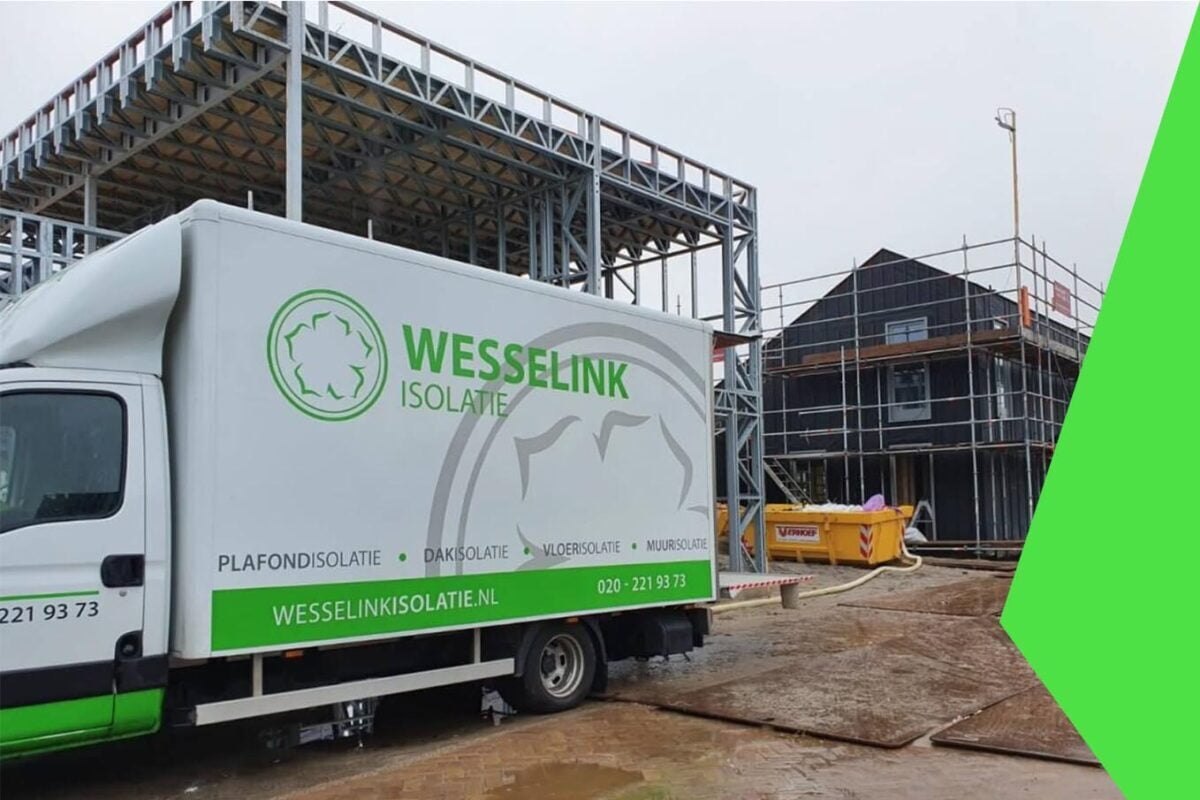

Wesselink Isolatie baseline measurement
The full baseline measurement of the CO₂ impact as a PDF, with the reasoning behind the figures.
Download the baseline measurement (PDF)About this project
- Prepared by
- New Economy.
- Client and sector
- Wesselink Isolatie — construction and insulation.
- The question
- Where does the company currently stand on climate impact, and what does climate-neutral business mean for day-to-day operations?
- The result
- Net CO₂-negative insulation, with hotspots and opportunities towards climate-neutral and regenerative business.
In short
For Wesselink Isolatie, New Economy mapped the CO₂ impact of the company’s activities through a baseline measurement. The core finding: biobased insulation stores more CO₂ over its lifetime than its production and installation emit.
The savings outweigh production. The CO₂ savings from the insulation are almost twice as large as the impact of production and installation — net CO₂-negative.
The question
The insulation task in the Netherlands is enormous: nearly 8 million homes with energy label C or lower still need to be insulated, plus a growing number of new-build projects. Insulation is often framed purely as CO₂ reduction through lower heat demand, but the environmental impact of producing the materials themselves stays out of view. Wesselink Isolatie, with the ambition to become climate-neutral and even regenerative, asked New Economy to make clear where the company currently stands.
The approach
Through a baseline measurement, New Economy mapped the current climate impact of operations — from purchased materials to the staff lunch — and identified where Wesselink can realise the greatest positive impact.
The result
The key findings are shown as figures above: net CO₂-negative insulation, with savings almost twice as large as the impact of production and installation, and biobased material that stores 1.3 kg of CO₂ per kilo against 0.09 kg of emissions. The baseline measurement also identified hotspots and opportunities, including biobased materials and renewable energy for blowing-in installation.
Towards climate-neutral, biobased insulation
With 10 years of experience, Wesselink is now moving towards 100% biobased and CO₂-negative insulation. Biobased materials store, for the long term, the CO₂ that plants absorbed while growing. The materials also improve the living environment, reduce noise nuisance and cut energy use — a double benefit.
Every euro spent on cellulose insulation stores CO₂ in your home!
Wesselink IsolatieWhat this delivers
Net CO₂-negative insulation shows how construction can shift from burden to repair — towards regenerative practice. It usually starts with a baseline measurement.
Frequently asked questions
A baseline measurement of the CO₂ impact of the company’s operations, with insight into hotspots and opportunities towards climate-neutral and regenerative business.
Yes: the CO₂ savings from using the insulation are almost twice as large as the impact of production and installation.
Every kilo of biobased insulation material stores 1.3 kg of CO₂ over its lifetime, against only 0.09 kg of emissions.
A fast way to gain insight into a company’s impact on climate (CO₂-eq), circularity and biodiversity, as a basis for targeted improvements.
Construction, specifically the insulation industry.
Related reading
Net CO₂-negative construction
From baseline measurement to insight into hotspots and opportunities towards climate-neutral and regenerative business. See also Baseline measurement / footprint.
Plan a conversation