
Dutch Design Week 2023
Live from Dutch Design Week
New Economy and studio Brian Kersbergen presented Biobased Design at Dutch Design Week, with the Regenerative Modular Cabinet in the Klokgebouw.
At Dutch Design Week 2023, New Economy and studio Brian Kersbergen presented the Biobased Design platform, with the Regenerative Modular Cabinet as its first project. Biobased Design is a driving force for building and designing with natural materials.
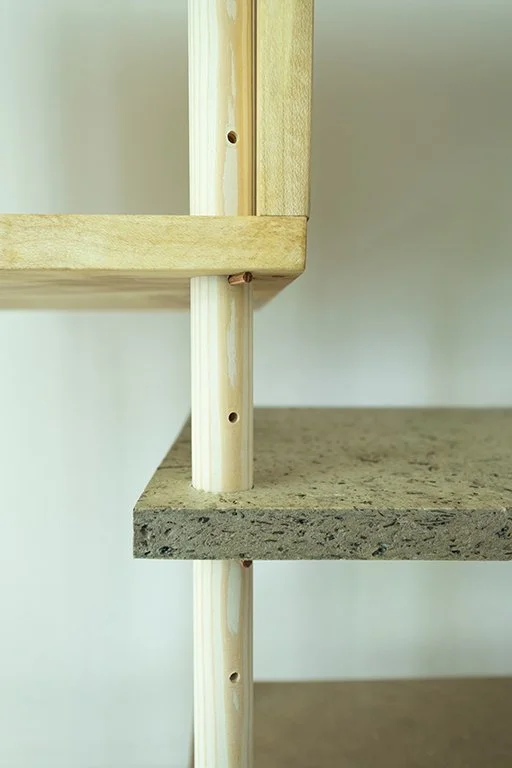
Amid the crowds in the Klokgebouw, the same questions kept returning: which materials is the cabinet made of and how are they pressed together? How does it differ from an ordinary shelving unit, and what does regenerative actually mean?
Preserve: reuse with healthy materials
For Biobased Design, preserving the environment and responsible material use are central. The platform actively encourages the reuse of materials and components that stay healthy in a second life. This goes further than recycling, where negative effects can occur in the process. Preserving materials at component level keeps environmental impact low.
Restore: giving back to nature
All new materials produced according to the biobased design philosophy are 100% biobased and biodegradable. They play a role in restoring the planet by storing CO₂ and creating a healthier living environment. The challenge is to find materials that grow faster than they are used and store more CO₂. Partners such as Vanhier, Stadshout, SeaWood by Blue Blocks, Ecor and De Eekhoorn provide innovative solutions.
Which materials are used?
SeaWood
100% natural, compostable and free of chemicals. Produced by Blue Blocks at BlueCity Rotterdam, building on Project Maasplaat.
Paulownia
Absorbs almost ten times more CO₂ than average wood and grows into cabinet material in ten years. An own field starts in 2024.
BioM VanHier
Covers made by local makers in Loosdrecht from reed or grass clippings. Natural fibres, a filler and a binder, each one unique.
Stadshout Amsterdam
A local sawmill giving every piece of city wood a new purpose, with a processing capacity of 2500 m3 per year.
Regenerate: building a new socio-economic system
Biobased Design works to build a socio-economic system that brings innovative makers, producers and companies to market. A regenerative system aims for preservation and restoration while also driving the economy, with materials that grow faster than they are used.
Impressions of Dutch Design Week
Many innovations at Dutch Design Week centred on material reuse and strengthening biodiversity. Urban Reef boosts urban biodiversity with 3D prints of natural material; Claudy Jongstra and Weved (Royal Vriesco Projects) make curtains from sheep wool that would otherwise be burned; MySpeaker shapes speakers from mycelium; and Plantpixel develops green facades that store CO₂ and improve insulation.
See also the launch of Biobased Design and the full project dossier.
Join the regenerative design revolution
Discover how the Biobased Design philosophy can find a place in the living room. Everyone can contribute to a future built on preservation, restoration and regeneration.