
Binas · material impact · education
Proud: material impact now has a place in Binas 7th edition
What began as a substantive proposal from New Economy to the Binas editorial team has become visible in the 7th edition of Binas havo/vwo. Thousands of students now encounter a way of judging materials that goes beyond technology and price.
Additional pages, tables, visualisations and example exercises about material impact.
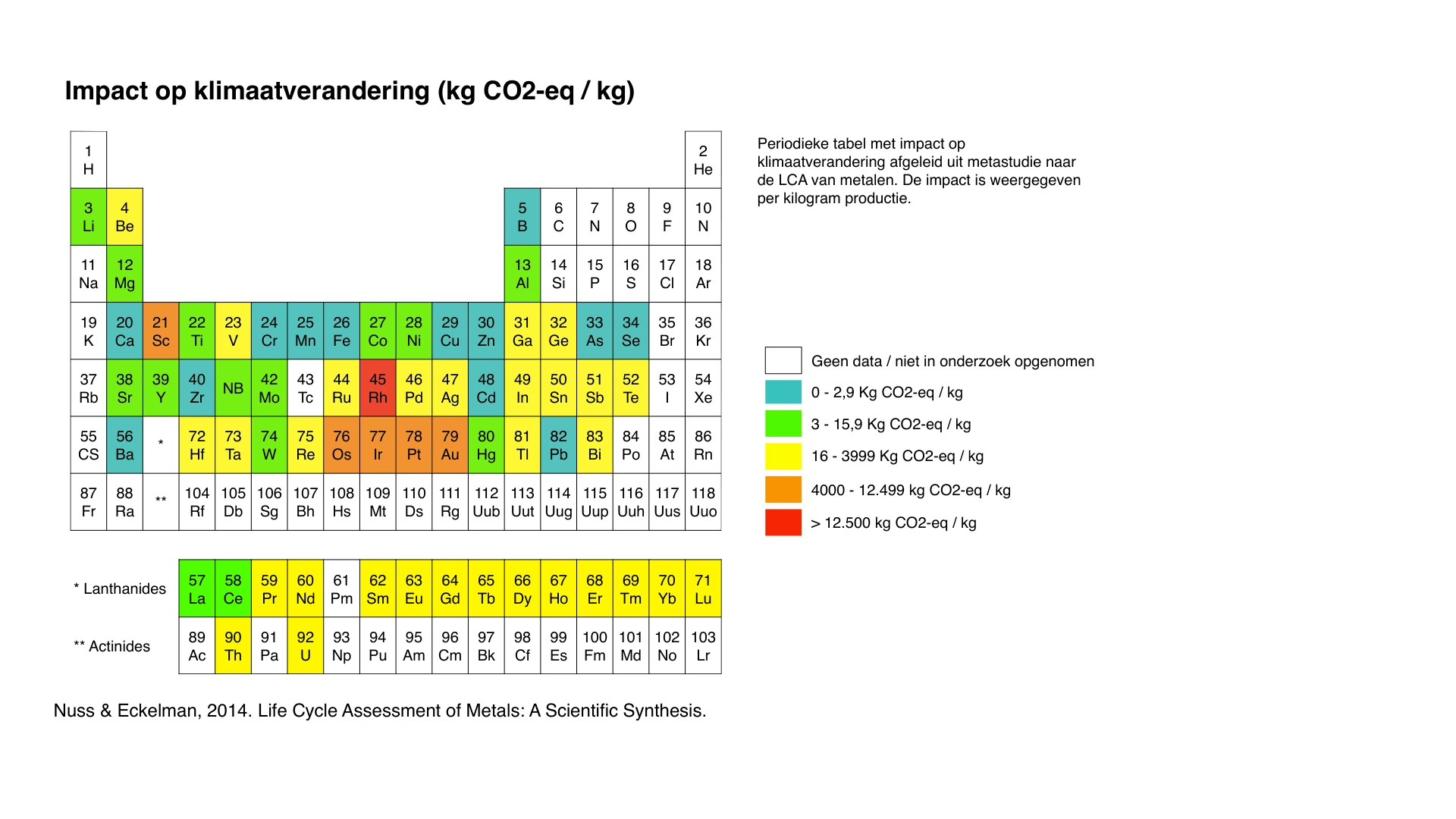
Impact of metal production on climate change, in kg CO₂ equivalent per kg of production.
Context article about the seventh edition of Binas havo/vwo.
Allowed as a reference for havo 2025 and vwo 2026.
From proposal to impact
For New Economy this is not a minor mention. It means many students in the Netherlands now encounter a way of looking that is essential for the future: judging materials on more than technical properties alone. Not only how strong something is, what it costs or whether it is recyclable, but also what its climate impact is, how scarce the raw material is, and what production means for health, supply chains and living environment.
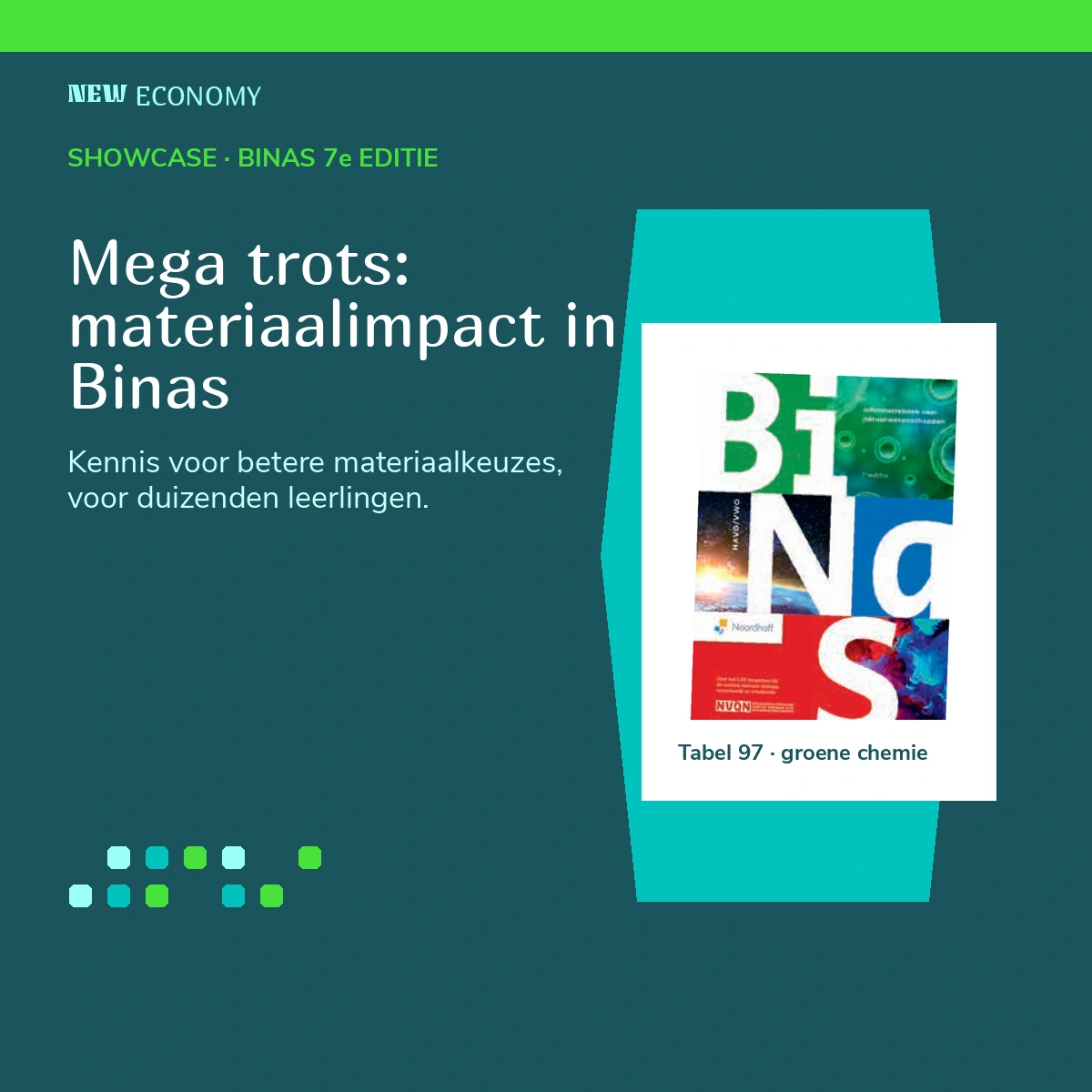
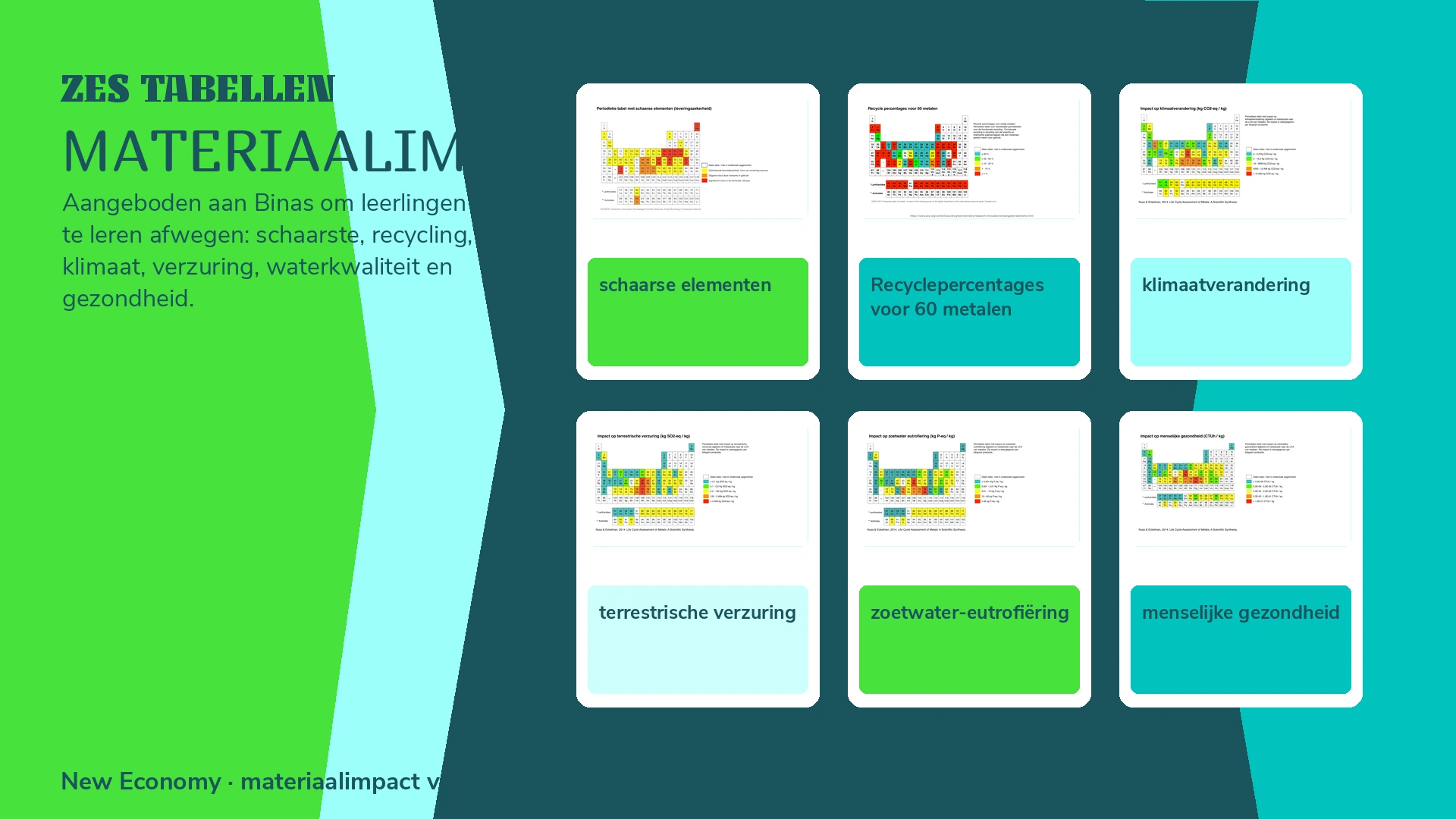
New Economy earlier submitted additional pages for Binas: tables, visualisations and example exercises about material impact. The aim was to give students insight into the world behind materials: CO₂ emissions, scarcity, recyclability, chain risks, environmental effects and social impact. A longer period of contact, alignment and verification followed. Knowledge in Binas has to be compact, factually correct and directly usable in education. That is exactly what made the process special: reducing complex impact data to something students and teachers can really work with.
Attention in NVOX
The NVOX article “De zevende editie van Binas havo/vwo” describes how the 7th edition was updated in response to revised syllabi for biology, physics and chemistry, requests from the field and new scientific insights. For chemistry, the article explicitly notes much more attention for sustainability and green chemistry, with new tables on the influence of metal production on environment and health.
Page 19 shows an example of Table 97D: impact of metal production on climate change, expressed in kg CO₂ equivalent per kg of production. That is exactly the movement New Economy has advocated for years: make material impact visible, comparable and discussable.
Why this matters
Binas is not just a book. It is a standard reference that generations of students use to calculate, compare, analyse and understand. It sits on classroom desks, is used for homework, tests and exams, and for many students forms a first encounter with how science orders the world. That material impact gains a place in it is significant.
Every student who sees that metal production is not only a technical process, but also has climate impact and environmental effects, looks at the world differently. Every student who learns that recyclability is not the whole story asks better questions. And every student who understands that material choices are connected to raw materials, supply chains, health and climate gains a richer picture of what sustainability really means. The great transitions of our time call for people who can read systems and weigh trade-offs.
A small table, a big movement
For New Economy this feels like confirmation of a simple conviction: if you want the world to be designed differently, you also have to learn to look differently. That starts with education. With tables, with examples, with the questions students learn to ask. And ultimately with the choices they make later as designers, builders, researchers, teachers, entrepreneurs, policymakers or conscious citizens.
New Economy is proud to have been able to contribute. Not because one table changes the world, but because every better choice starts somewhere. And sometimes that choice simply starts in Binas.
Sources and download
- New Economy-aanlevering aan Binas, 2021.
- NVOX 2022, nummer 8, oktober 2022, blz. 18–19, “De zevende editie van Binas havo/vwo”.
- Noordhoff-artikel over Binas 7e editie, 11 oktober 2022.
- Binas periodieke tabellen, New Economy-bijlage.
It means that students in science education learn to judge materials on more than technology and price: also on CO₂ emissions, scarcity, recyclability and effects on environment and health. Binas 7th edition gained more attention for sustainability and green chemistry, with tables on the influence of metal production on environment and health.
New Economy took the initiative and, in 2021, submitted additional pages, tables, visualisations and example exercises about material impact, followed by contact, alignment and verification with the Binas editorial team.
Table 97D shows the impact of metal production on climate change, expressed in kg CO₂ equivalent per kg of production. An example appears on page 19 of the NVOX article about the seventh edition of Binas.
Binas is a standard reference that generations of students use to calculate, compare and analyse. Because material impact becomes visible in it, students learn that material choice is not neutral and is connected to raw materials, supply chains, health and climate.
Frequently asked questions about material impact in Binas
In the 7th edition of Binas havo/vwo. It is allowed as a reference for the havo 2025 and vwo 2026 exams.
Mainly in chemistry: the 7th edition gives much more attention to sustainability and green chemistry, with new tables on the influence of metal production on environment and health.
Not only on strength, price and recyclability, but also on climate impact, scarcity of the raw material and consequences for health, supply chains and living environment.
The NVOX article about the seventh edition of Binas havo/vwo (2022, issue 8, pp. 18-19) describes the updates; page 19 shows an example of Table 97D.
Knowledge in Binas has to be compact, factually correct and directly usable in education. The challenge was reducing complex impact data to something students and teachers can really work with.
To make material impact visible, comparable and discussable; if you want the world to be designed differently, you also have to learn to look differently, and that starts with education.
The periodic tables are available as a New Economy supplement and can be downloaded from this page.
In response to revised syllabi for biology, physics and chemistry, requests from the field and new scientific insights.
Further reading
New Economy helps organisations translate material choices, supply chains and impact data into practical decision-making, from product footprints and LCA to circular strategy and regenerative design.
From material data to better choices
Material impact becomes useful when figures, sources and trade-offs are made understandable for design, education and decision-making.